

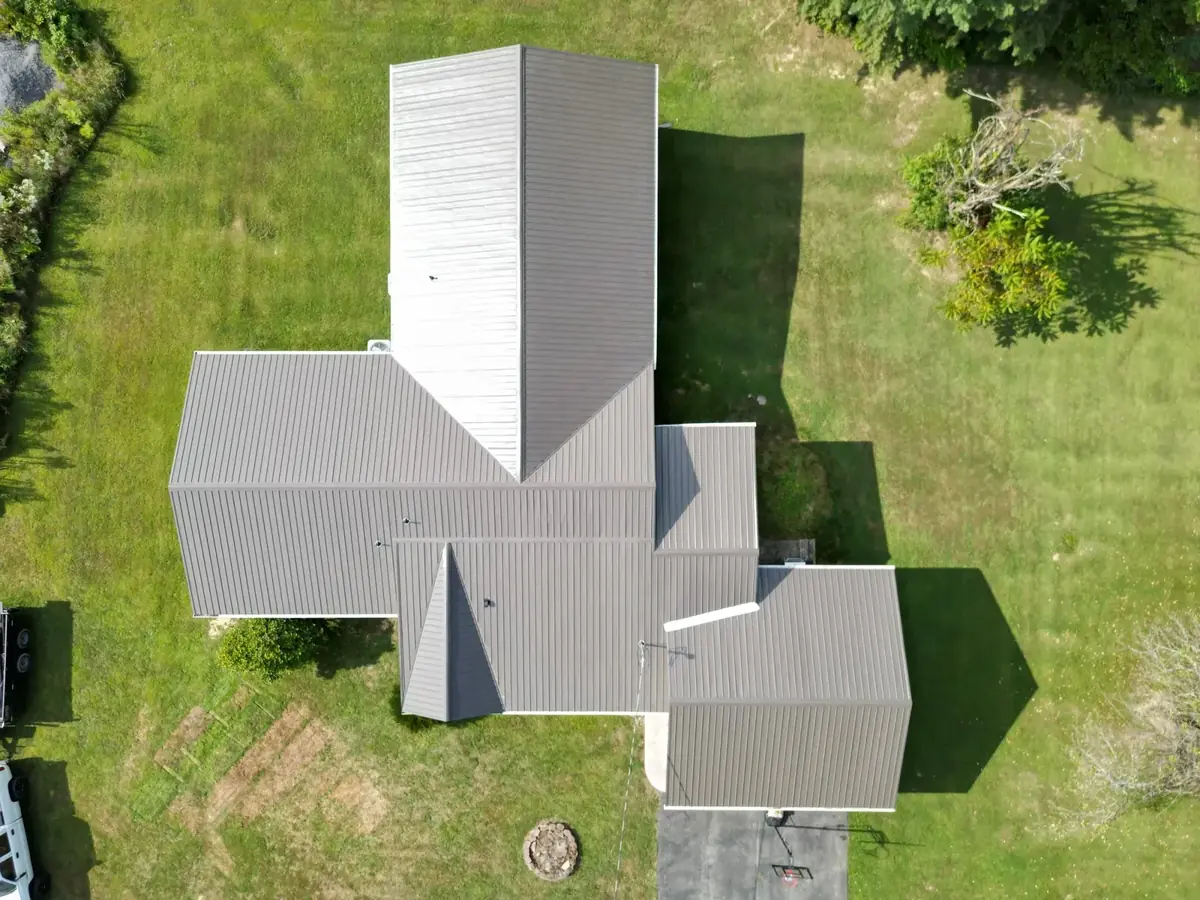
Did hail actually damage your roof?
Half the hail "damage" homeowners get knocked-door-pitched about isn't damage at all — it's mechanical wear, blistering, or normal granule loss. Here's how to tell, and how we test for it the way an adjuster will.
What real hail damage looks like.
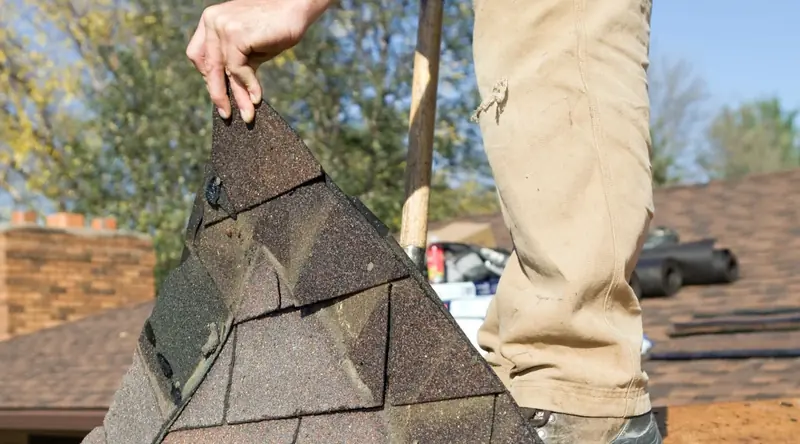
Circular bruising
Soft, dark, slightly indented circles roughly the size of a dime to a quarter. Granules dislodged in the center; black mat visible. The shape is the giveaway — mechanical scuff is linear; hail is round.

Granule pooling
Heavy accumulation of granules at the base of downspouts and in gutter elbows immediately after a storm. Some loss is normal over years; sudden post-storm pooling is not.
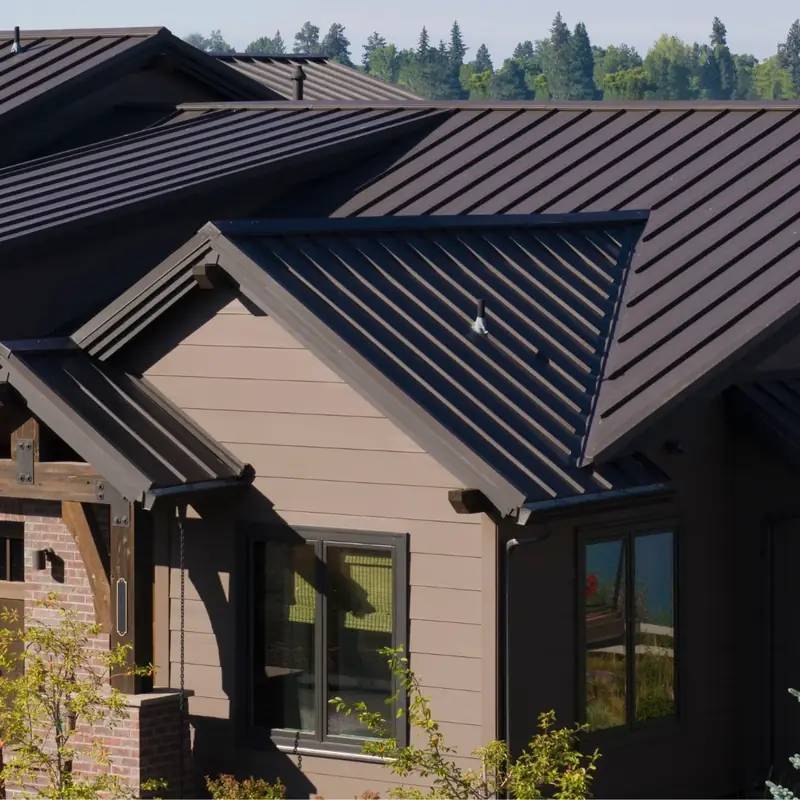
Dents on collateral
Soft metal damage — gutter tops, downspout backs, AC fin coils, mailbox tops, vent pipes — confirms hail size and orientation. Adjusters look here first.
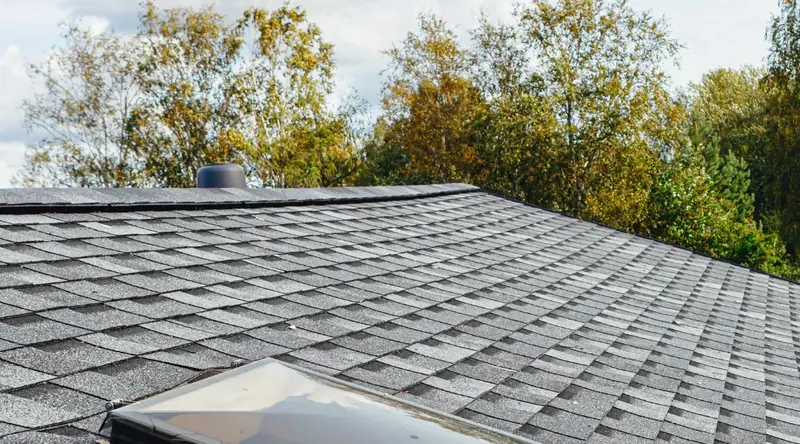
Soft hits
Squeeze a suspect mark gently. Hail damage feels spongy under the granule layer (the mat is bruised). Mechanical scuff feels firm.
Crack lines from impact
Larger hail (1.5" +) can split the shingle, especially at the keyway or butt edge. Sometimes invisible from the ground; clear at boots-on.
Multi-slope pattern
Hail falls from sky; damage typically appears on the most-exposed slopes (south/west in most TN storms). Damage on every slope including the leeward ones is a stronger claim.
What it’s not.
- Blistering — bubble-like raised spots caused by trapped moisture in the asphalt. Round, but flat-topped and not bruised. Granule loss inside, but the pattern is random across slopes, not directional.
- Mechanical wear — drag marks, scuff from a contractor’s boots, equipment damage from a chimney sweep. Linear and localized.
- Normal granule loss — light shedding from a 12+ year asphalt roof. Not pooled, not sudden, not patterned.
- Foot traffic — concentrated wear in walking patterns from prior service work. Black mat exposed in a path.
- Manufacturing defect — granule-loss patterns that follow the rectangular nailing zone. These are warranty events, not claim events.
A storm-chaser contractor will call all of these "hail damage" so you’ll let them file a claim with their preferred adjuster. An honest roofer tells you which is which.
How we actually count damage.
The industry-standard method (and what every TN carrier’s adjusters use) is the 10' × 10' test square. We chalk-mark a 100 sq. ft. area on each elevation of the roof, then count distinct hail strikes inside the box.
Thresholds vary by carrier and adjuster but typically:
- 0–4 hits per square: below threshold — not a claimable loss.
- 5–7 hits per square: borderline. Usually requires functional damage (cracked mat) on at least one elevation to qualify.
- 8+ hits per square on multiple slopes: typical full-replacement threshold.
We do this on every slope, photograph each square with a date-stamped scale, and put it in your claim package. Adjusters appreciate this — they don’t have to redo it themselves, and they trust the numbers.
We test for functional damage separately — hail that breaks the integrity of the shingle (cracked mat, displaced granules to the bituminous layer, lifted seal). Functional damage on one slope can sometimes carry the whole replacement when test-square counts are borderline.
Hailing again next spring? Build a roof that shrugs.
Class 4 impact-rated shingles (Atlas StormMaster Shake / Slate) are tested to UL 2218 — a 2" steel ball dropped from 20 feet, twice on the same spot, with no mat fracture. Most TN insurers discount premiums 5–28% on a Class 4 install. Often pays for itself in 6–10 years.
Suspect hail damage? Let us look first.
A free inspection takes 45 minutes and gives you an honest answer before you file a claim.