

The Tri-Cities sit in the southeastern edge of "hail alley." We get one to three significant hail events per year — usually April through June, occasionally a late-season September storm. After every one, our phones ring with the same question: is my roof actually damaged enough for insurance to pay?
Here's how the process really works, written from a working roofer's perspective — what adjusters actually look for, and what makes the difference between an approved claim and a denied one.
What "damage" means to an adjuster
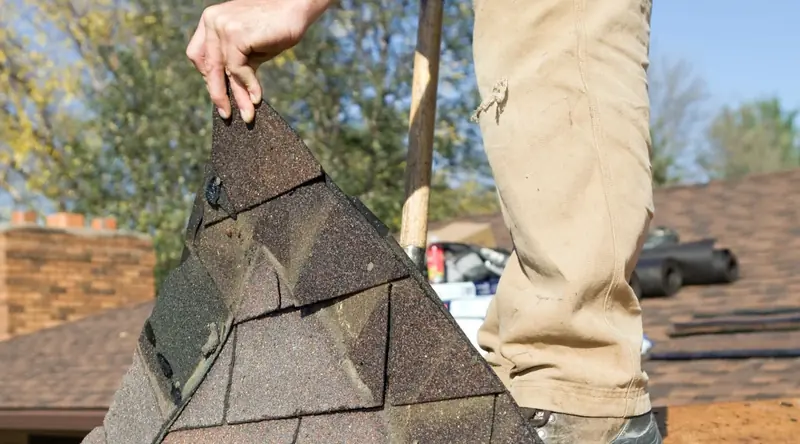
Insurance adjusters don't care if your roof looks bad after a hailstorm. They care about a specific, measurable thing: impact bruises that break the asphalt-fiberglass bond and expose the mat. Cosmetic dings — dents to soft metal flashings, scuffs on the granules — don't count. A bruise counts when:
- The granule layer is dislodged in a circular pattern roughly the diameter of the hailstone (¾" to 2" typically in TN).
- The exposed area shows the black asphalt mat underneath.
- The bruise is "fresh" — no granular weathering inside the impact circle yet.
The standard adjuster test in our market is the 10×10 square method. The adjuster chalks off a 10-foot by 10-foot test area on a representative roof slope, then counts bruises:
- 8 or more bruises: slope is typically approved for replacement.
- 6 or 7 bruises: judgment call. Hinges on bruise severity, age of roof, and the adjuster's discretion.
- Fewer: unlikely to approve, even with visible damage elsewhere.
The threshold is per-slope, not per-roof. We've had homes where the south slope approves and the north slope denies. The carrier pays for the approved slope only — unless your policy has a matching clause (more on that below).
The 7-step process, from storm to check
- Document the storm. Save weather reports, NEXRAD radar screenshots, news links. The carrier will verify a "qualifying weather event" on your address before they engage. NOAA's Storm Events Database is free and searchable by ZIP.
- Have a roofer inspect first to confirm coverable damage. A meaningful share of "storm damage" calls turn out to be wear and tear, not a covered peril — and filing a claim that gets denied creates a claim event on your record without benefit. Once damage is confirmed, file with your insurance company directly. Most TN policies have a 1-year filing window from the storm date, so don't sit on it.
- Carrier schedules an adjuster. Typically 5–14 business days. The adjuster will call to schedule a roof inspection.
- Get a roofer to the inspection. This is the step homeowners skip and regret. Call your roofer the day you schedule the adjuster. Most reputable Tri-Cities roofers will meet the adjuster on-site at no charge. We document the roof to the same standard the adjuster uses — and we challenge findings on the spot when warranted.
- Adjuster issues a scope. Within 5–10 days you'll receive a written estimate (the "scope of loss") with line items: tear-off, underlayment, shingles, flashing, etc. Read it. Numbers will be low. That's normal.
- Supplement what's missing. Adjusters miss things — pipe boots, ice & water shield, code-mandated drip edge, ventilation. Your roofer submits a written supplement with manufacturer specs and TN code citations. Carriers approve 60–80% of well-documented supplements.
- Schedule the work, then collect. The carrier issues actual cash value (ACV) — the depreciated value — as the first check. Once we complete the work and submit final invoices, the recoverable depreciation releases as a second check. Total elapsed time on a clean claim: about 21 days.
The matching clause — what it can save you
If your policy includes a "matching" or "uniform appearance" provision, and the carrier can't source shingles that reasonably match your existing roof (discontinued color, line, or weathering), they may owe full replacement of all undamaged slopes that share a continuous plane. This is real money — often the difference between a partial-slope settlement and a full-roof settlement.
Tennessee is not a "matching state" by statute, but most homeowner policies sold here include matching language. Read your policy or ask your agent for the exact wording.
What we won't do
- "Free inspection" before your claim is filed. When a roofer knocks on your door after a storm and offers to "check for damage and handle the insurance," that's a sales tactic, not an inspection. Real inspections happen alongside your adjuster, on a claim you've filed yourself.
- "We'll waive your deductible." Waiving a deductible is insurance fraud in Tennessee. Any contractor offering this is committing a felony and asking you to participate.
- Pressure to sign a contingency agreement on day one. Don't sign anything until your claim is approved. Period.
If the claim isn't approved
You have 60 days under Tennessee law to request a re-inspection or formal appeal. The process is between you, your carrier, and (if needed) an independent appraiser or the TN Department of Commerce & Insurance — not your roofer.
The bottom line
Hail claims are not a sales opportunity for your roofer — they're a process you run, with your roofer documenting alongside your adjuster. Done in the right order, an honest claim closes in 21 days at the cost of your deductible. Done in the wrong order, you can lose the claim, get non-renewed, and still owe for the work.
Storm hit your house? Call us before you call the storm-chasers. We'll meet your adjuster on the roof, document the damage to the carrier's standard, and walk you through every step. No contract until your claim approves. Storm damage page →