

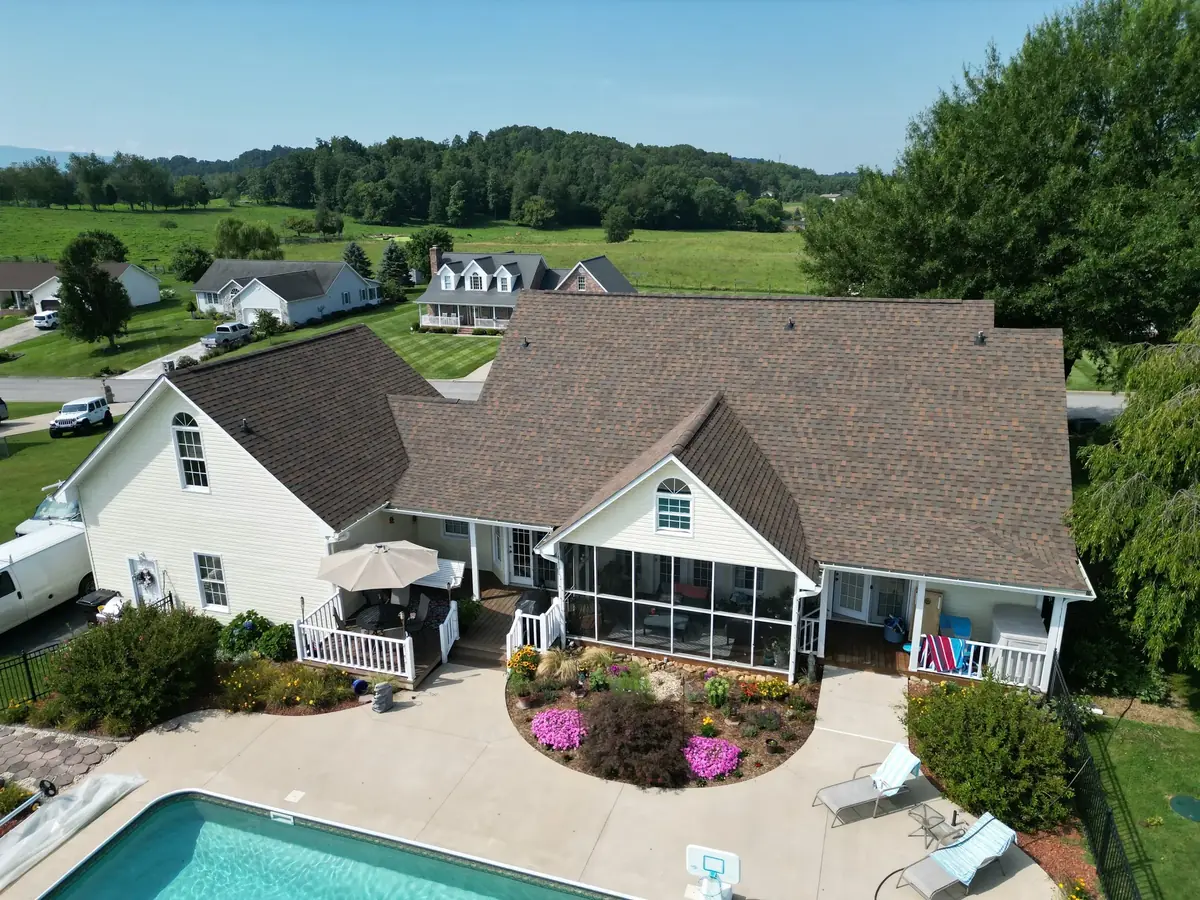
Roofing for Greeneville.
26 minutes south on 11E. Tennessee's second-oldest incorporated town, Andrew Johnson's home, and rebuilding since Helene (September 2024). Tusculum, Mosheim, Baileyton, Chuckey, Camp Creek, and the Cherokee National Forest fringe.
What we know about Greeneville roofs
Greene County's housing stock falls into four rough buckets, and each one has a roofing fingerprint worth knowing before you sign anything.
Downtown Greeneville and the National Register Historic District — c.1830–1940 frame and brick homes around the Andrew Johnson National Historic Site, Dickson-Williams Mansion, and General Morgan Inn. Greeneville has been a Certified Local Government since 1985 and the Historic Zoning Commission has approval authority over exterior alterations. Standing-seam metal, architectural asphalt, and synthetic slate are typically acceptable when the original roof profile is preserved.
Suburban Tusculum Boulevard and the Greeneville Commons corridor — postwar and 1970s–80s ranches and split-levels on 5/12 to 7/12 pitches. The bread-and-butter asphalt replacement market. Many of these homes are now reaching their second-generation shingle conversion window.
Mosheim, Baileyton, Chuckey, Limestone, and Afton — surrounding unincorporated rural communities. Older farmhouses and high metal-roof penetration. Chuckey, Caney Branch, and Briar Thicket overlap the heaviest Helene damage zone — sediment-displaced lots, FEMA Direct Temporary Housing units, and ongoing NFIP elevation requirements on substantially damaged structures.
Cherokee National Forest fringe (Bald Mountains) — mountain second-homes, cabins, and short-term rentals along the southeastern county fringe. Steep-slope access premium; 24-gauge standing-seam Galvalume is the working spec for snow shedding and 110–115 mph wind exposure at elevation.
Camp Creek and Horse Creek — the April 2011 EF-3 tornado footprint. Homes rebuilt in 2011–12 are now in the back half of their original architectural-shingle lifecycle. Receptive market for Class 4 impact-rated upgrades; many regional carriers discount premiums on Class 4 installs.
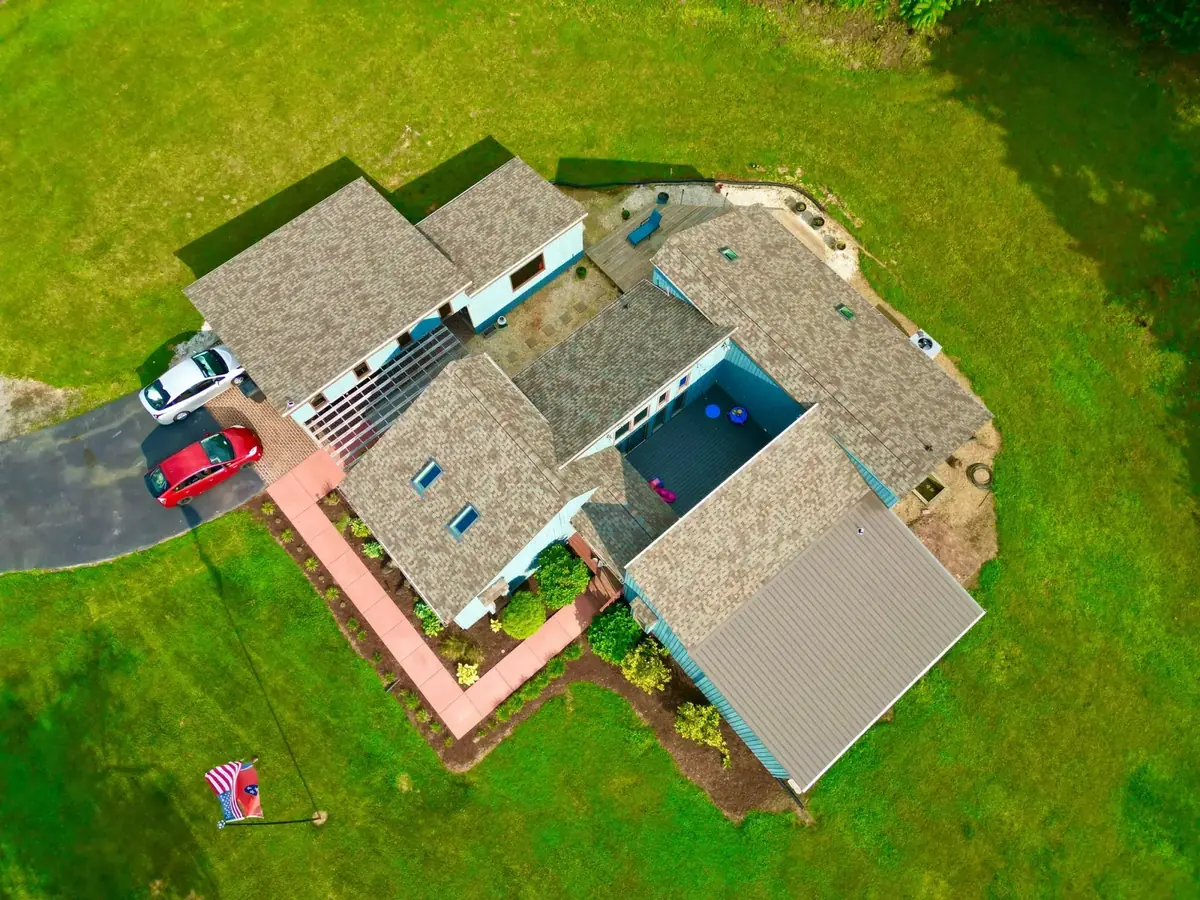
Greene County rebuild.
One roof at a time.
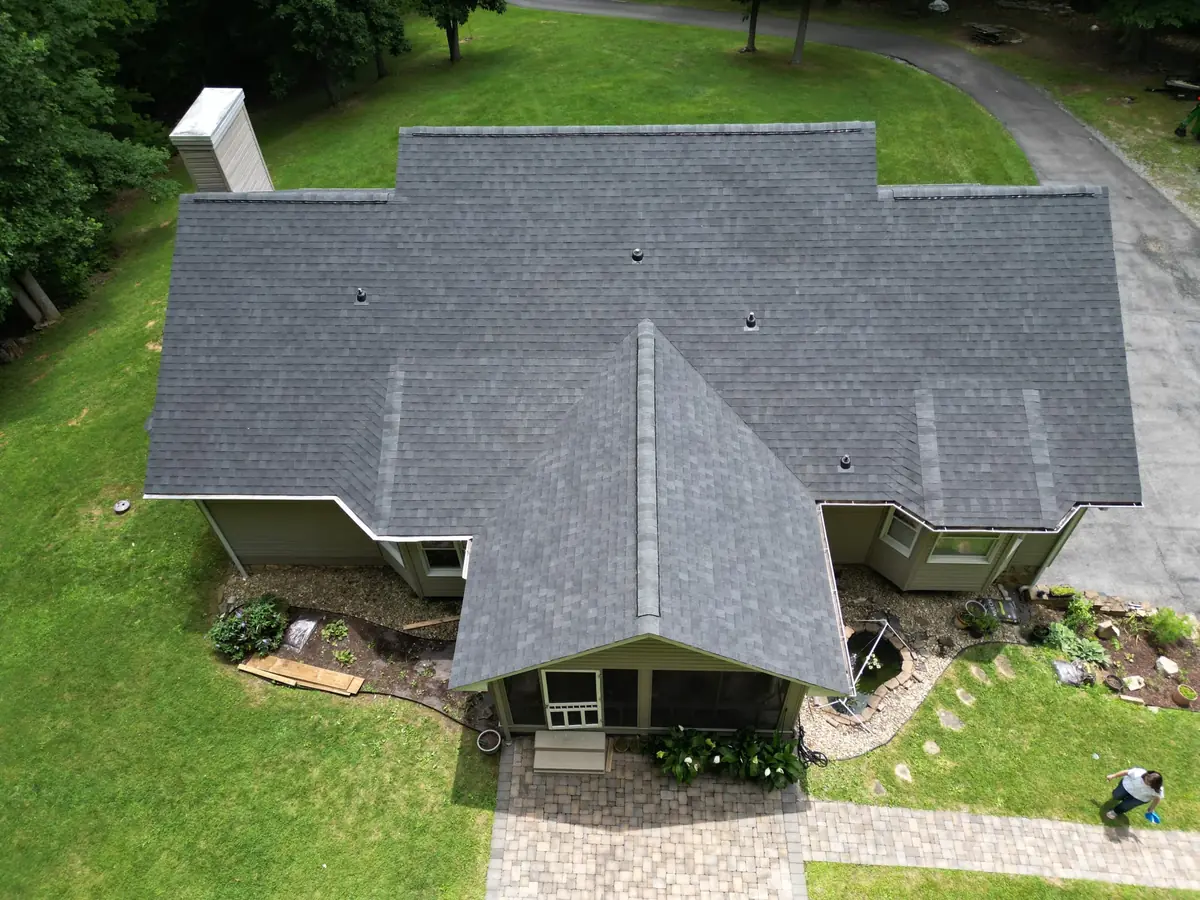
Tusculum colonial
Class 4 impact-rated replacement · 2,600 sqft · post-Helene wind claim · 2025
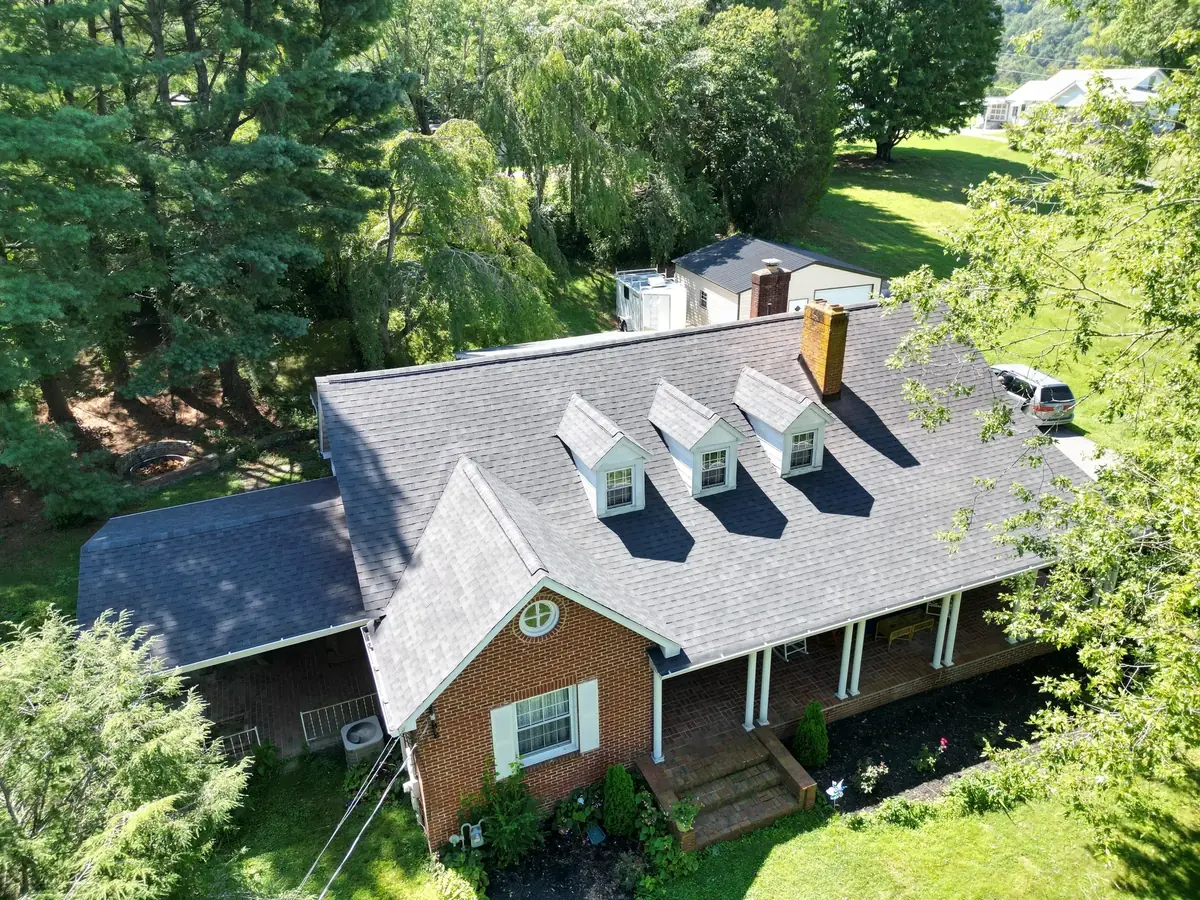
Camp Creek cohort reroof
14-year-old shingle replacement · 2,400 sqft · Atlas Pinnacle Pristine Hearthstone · ridge ventilation added · 2025
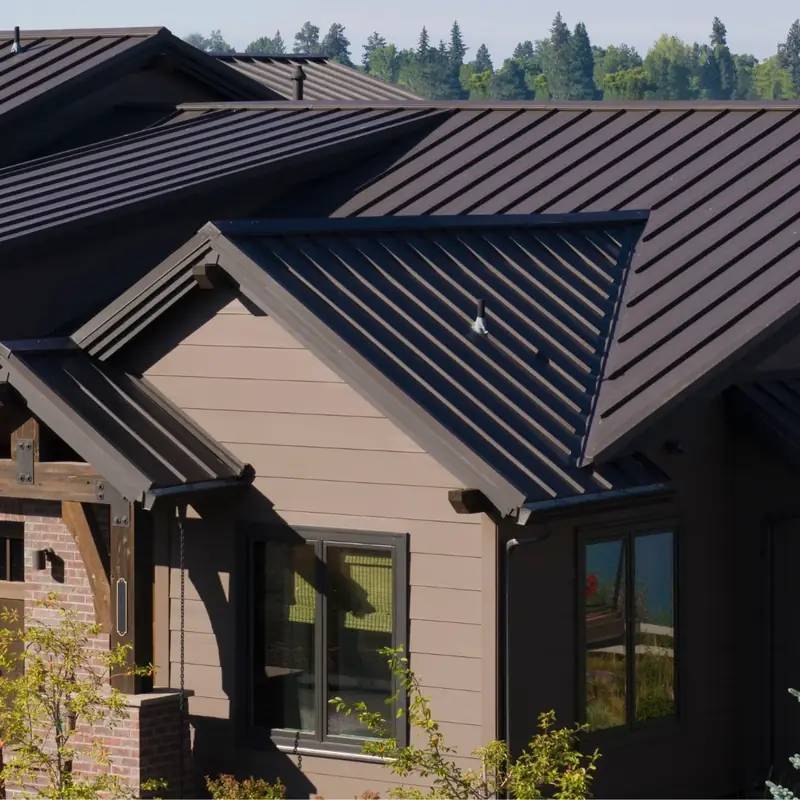
Cherokee fringe cabin
24-gauge standing-seam Galvalume · 1,800 sqft · steep-slope access · extended Atlas material warranty · 2025
Questions, answered locally
Do you handle Helene insurance claims in Greene County?
Yes. We document wind and storm damage with date-stamped photos, write claim language in carrier terms, and meet adjusters on-site. We work with the major TN carriers. If your damage is older than 12 months, the claim window may still be open under your policy — bring us the original adjuster report and we'll tell you straight whether a supplemental claim is realistic.
Is Greeneville's historic district subject to roofing review?
Yes. Properties inside the ~135-acre National Register district around the Andrew Johnson NHS require Historic Zoning Commission approval before exterior alterations, including roof replacement. The HZC meets monthly; submissions are due by the 20th of the preceding month. Architectural asphalt, standing-seam metal, and synthetic slate are typically acceptable when the original roof profile is preserved. We handle the HZC submission and Certificate of Appropriateness as part of every historic-district install.
How do I verify a roofer's Tennessee license?
Go to verify.tn.gov and search the contractor by name. Tennessee requires a state contractor license for any project of $25,000 or more — so a license that doesn't come up in that lookup is a red flag for door-knockers and out-of-state storm chasers. The Tennessee Attorney General and TDCI both issued specific warnings about disaster-relief scams after Helene. If the price seems too good and the truck has out-of-state plates, walk away.